
Psalm 143
Psalm 143 is David's prayer from a low and dark place. He asks God to hear him on the basis of God's faithfulness rather than his own record, admits his spirit is overwhelmed, and asks to hear God's lovingkindness in the morning and be taught to do his will.
Psalm 143 (KJV)
Hear my prayer, but enter not into judgment v. 1-2
1Hear my prayer, O LORD, give ear to my supplications: in thy faithfulness answer me, and in thy righteousness.
2And enter not into judgment with thy servant: for in thy sight shall no man living be justified.
Crushed and overwhelmed v. 3-4
3For the enemy hath persecuted my soul; he hath smitten my life down to the ground; he hath made me to dwell in darkness, as those that have been long dead.
4Therefore is my spirit overwhelmed within me; my heart within me is desolate.
Remembering and thirsting v. 5-6
5I remember the days of old; I meditate on all thy works; I muse on the work of thy hands.
6I stretch forth my hands unto thee: my soul thirsteth after thee, as a thirsty land. Selah.
Hear me speedily v. 7-9
7Hear me speedily, O LORD: my spirit faileth: hide not thy face from me, lest I be like unto them that go down into the pit.
8Cause me to hear thy lovingkindness in the morning; for in thee do I trust: cause me to know the way wherein I should walk; for I lift up my soul unto thee.
9Deliver me, O LORD, from mine enemies: I flee unto thee to hide me.
Teach me to do thy will v. 10-12
10Teach me to do thy will; for thou art my God: thy spirit is good; lead me into the land of uprightness.
11Quicken me, O LORD, for thy name’s sake: for thy righteousness’ sake bring my soul out of trouble.
12And of thy mercy cut off mine enemies, and destroy all them that afflict my soul: for I am thy servant.
What Psalm 143 means
Psalm 143 starts with an unusual request. David asks God to answer in thy faithfulness and in thy righteousness, then immediately asks him not to enter into judgment with his servant, for in thy sight shall no man living be justified. He is not pleading his own innocence. He is leaning on who God is.
Verses 3 and 4 describe what he is going through. An enemy has hunted him, pressed his life to the ground, and made him dwell in darkness like the long dead. His spirit is overwhelmed and his heart is desolate. The psalm gives words to that kind of heaviness without hurrying past it.
What he does next is worth noticing. He remembers the days of old and thinks about God's works. Then he stretches out his hands and says his soul thirsts for God as a thirsty land. Memory of what God has done becomes the bridge from despair to prayer.
Verses 7 to 9 are urgent: hear me speedily, my spirit faileth. Verse 8 is the line many people pray at the start of a day, asking to hear God's lovingkindness in the morning and to be shown the way to walk.
The last section moves from rescue to guidance. Teach me to do thy will, David says, and lead me into the land of uprightness. He asks for life again for thy name's sake, and he ends by calling himself thy servant.
Background and context
The KJV heading reads, A Psalm of David. Some readers connect it with the years David fled from Saul, or from his son Absalom, but the psalm does not name the occasion.
Church tradition counts it as the last of the seven Penitential Psalms (6, 32, 38, 51, 102, 130 and 143), read as prayers of repentance. Verse 2 is echoed by Paul in Romans 3:20 and Galatians 2:16.
Key verses
Cause me to hear thy lovingkindness in the morning; for in thee do I trust: cause me to know the way wherein I should walk; for I lift up my soul unto thee.
Psalm 143:8 · KJV
Teach me to do thy will; for thou art my God: thy spirit is good; lead me into the land of uprightness.
Psalm 143:10 · KJV
And enter not into judgment with thy servant: for in thy sight shall no man living be justified.
Psalm 143:2 · KJV
Cross references
- Romans 3:20 Paul echoes verse 2: by the deeds of the law there shall no flesh be justified in his sight.Therefore by the deeds of the law there shall no flesh be justified in his sight: for by the law is the knowledge of sin.
- Galatians 2:16 The same idea again, applied to faith in Jesus Christ.Knowing that a man is not justified by the works of the law, but by the faith of Jesus Christ, even we have believed in Jesus Christ, that we might be justified by the faith of Christ, and not by the works of the law: for by the works of the law shall no flesh be justified.
- Psalm 77:11-12 Another psalm where remembering the works of the LORD lifts a troubled heart.I will remember the works of the LORD: surely I will remember thy wonders of old. I will meditate also of all thy work, and talk of thy doings.
- Psalm 63:1 David's soul thirsteth for God in a dry and thirsty land, like verse 6.O God, thou art my God; early will I seek thee: my soul thirsteth for thee, my flesh longeth for thee in a dry and thirsty land, where no water is;
- Psalm 42:1-2 As the hart panteth after the water brooks, the soul longs for God.As the hart panteth after the water brooks, so panteth my soul after thee, O God. My soul thirsteth for God, for the living God: when shall I come and appear before God?
- Lamentations 3:22-23 God's mercies are new every morning, a close match for verse 8.It is of the LORD’s mercies that we are not consumed, because his compassions fail not. They are new every morning: great is thy faithfulness.
- Psalm 25:4-5 David asks the same thing as verse 10: shew me thy ways, teach me thy paths.Shew me thy ways, O LORD; teach me thy paths. Lead me in thy truth, and teach me: for thou art the God of my salvation; on thee do I wait all the day.
How well do you know Psalm 143?
7 questions, every answer checked against the King James text. Play it here, then try a full book quiz.
Want more? Play the full Psalms Bible quiz.
Common questions
What is Psalm 143 about?
It is David's prayer when he feels crushed and in the dark. He asks God to answer out of his own faithfulness, remembers God's past works, and asks to be guided and taught to do God's will.
Where does the Bible say cause me to hear thy lovingkindness in the morning?
Psalm 143:8, which goes on to ask, cause me to know the way wherein I should walk.
Is Psalm 143 a penitential psalm?
Yes. Church tradition lists it as the seventh and last of the Penitential Psalms, largely because of verse 2.
Who wrote Psalm 143?
Its heading credits David. The psalm does not say what trouble he was in when he wrote it.
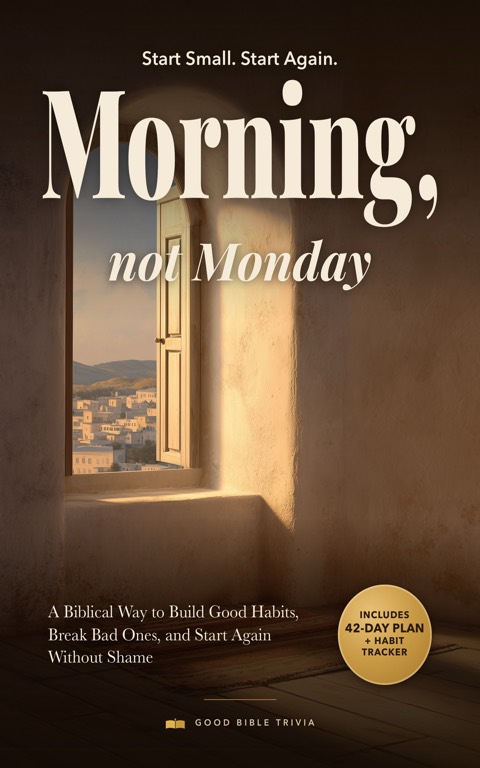
Morning, Not Monday
Build good habits, break bad ones, and start again without shame
Psalm 143:8 is a morning prayer, and Morning, Not Monday is our Bible-based book on building daily habits and starting again without shame.
See the book →