
Psalm 51
Psalm 51 is David's prayer of repentance, written according to its title after the prophet Nathan confronted him about his sin with Bathsheba. David confesses plainly, asks God to wash him and "Create in me a clean heart, O God," and says the sacrifice God wants is "a broken and a contrite heart."
Psalm 51 (KJV)
Have mercy upon me, O God v. 1-4
1Have mercy upon me, O God, according to thy lovingkindness: according unto the multitude of thy tender mercies blot out my transgressions.
2Wash me throughly from mine iniquity, and cleanse me from my sin.
3For I acknowledge my transgressions: and my sin is ever before me.
4Against thee, thee only, have I sinned, and done this evil in thy sight: that thou mightest be justified when thou speakest, and be clear when thou judgest.
Wash me, and I shall be whiter than snow v. 5-9
5Behold, I was shapen in iniquity; and in sin did my mother conceive me.
6Behold, thou desirest truth in the inward parts: and in the hidden part thou shalt make me to know wisdom.
7Purge me with hyssop, and I shall be clean: wash me, and I shall be whiter than snow.
8Make me to hear joy and gladness; that the bones which thou hast broken may rejoice.
9Hide thy face from my sins, and blot out all mine iniquities.
Create in me a clean heart v. 10-13
10Create in me a clean heart, O God; and renew a right spirit within me.
11Cast me not away from thy presence; and take not thy holy spirit from me.
12Restore unto me the joy of thy salvation; and uphold me with thy free spirit.
13Then will I teach transgressors thy ways; and sinners shall be converted unto thee.
A broken and a contrite heart v. 14-17
14Deliver me from bloodguiltiness, O God, thou God of my salvation: and my tongue shall sing aloud of thy righteousness.
15O Lord, open thou my lips; and my mouth shall shew forth thy praise.
16For thou desirest not sacrifice; else would I give it: thou delightest not in burnt offering.
17The sacrifices of God are a broken spirit: a broken and a contrite heart, O God, thou wilt not despise.
Build thou the walls of Jerusalem v. 18-19
18Do good in thy good pleasure unto Zion: build thou the walls of Jerusalem.
19Then shalt thou be pleased with the sacrifices of righteousness, with burnt offering and whole burnt offering: then shall they offer bullocks upon thine altar.
What Psalm 51 means
David does not start with excuses. He starts with God's character: have mercy according to thy lovingkindness and the multitude of thy tender mercies. Then he names his sin with three different words, transgressions, iniquity and sin, and asks God to blot out, wash and cleanse. Verse 4 is striking because he had wronged Bathsheba and Uriah, yet he says, "Against thee, thee only, have I sinned": all sin is first against God.
Verses 5-9 go deeper. David says he was shapen in iniquity, meaning the problem is not one bad act but his own heart. He asks to be purged with hyssop, the plant used in Israel's cleansing rituals, and promises the result: "wash me, and I shall be whiter than snow." He asks God to hide his face from his sins and to let crushed bones rejoice again.
Verses 10-13 are the centre. "Create in me a clean heart, O God; and renew a right spirit within me." The word create is the same verb used in Genesis 1, used only of God, as if David knows only a new act of God can fix him. He asks not to be cast away or to lose God's holy spirit, and to have the joy of salvation restored. Then he will teach other sinners the way back.
Verses 14-17 explain what God wants. David asks to be delivered from bloodguiltiness, the guilt of Uriah's death. He knows no animal sacrifice can pay for this: "The sacrifices of God are a broken spirit: a broken and a contrite heart, O God, thou wilt not despise."
The last two verses turn from the king to the city: do good to Zion, build the walls of Jerusalem, and then right sacrifices will please God again. A forgiven leader prays for the people he had put at risk.
Background and context
The KJV title reads: To the chief Musician, A Psalm of David, when Nathan the prophet came unto him, after he had gone in to Bathsheba. The story is in 2 Samuel 11-12: David took Bathsheba, the wife of Uriah the Hittite, and arranged Uriah's death in battle. God sent Nathan with a parable about a rich man who stole a poor man's lamb, and when David was angry, Nathan said, "Thou art the man."
David confessed, "I have sinned against the LORD," and Nathan told him the LORD had put away his sin. The title presents Psalm 51 as the prayer behind that confession, and because it is addressed to the chief Musician, many readers think it was meant to be sung in public worship.
Key verses
Have mercy upon me, O God, according to thy lovingkindness: according unto the multitude of thy tender mercies blot out my transgressions.
Psalm 51:1 · KJV
Create in me a clean heart, O God; and renew a right spirit within me.
Psalm 51:10 · KJV
The sacrifices of God are a broken spirit: a broken and a contrite heart, O God, thou wilt not despise.
Psalm 51:17 · KJV
Cross references
- 2 Samuel 12:7 Nathan confronts David: "Thou art the man."And Nathan said to David, Thou art the man. Thus saith the LORD God of Israel, I anointed thee king over Israel, and I delivered thee out of the hand of Saul;
- 2 Samuel 12:13 David confesses, and Nathan tells him the LORD hath put away his sin.And David said unto Nathan, I have sinned against the LORD. And Nathan said unto David, The LORD also hath put away thy sin; thou shalt not die.
- Isaiah 1:18 Though your sins be as scarlet, they shall be as white as snow.Come now, and let us reason together, saith the LORD: though your sins be as scarlet, they shall be as white as snow; though they be red like crimson, they shall be as wool.
- Ezekiel 36:26 God promises a new heart and a new spirit.A new heart also will I give you, and a new spirit will I put within you: and I will take away the stony heart out of your flesh, and I will give you an heart of flesh.
- Psalm 34:18 The LORD saves such as be of a contrite spirit.The LORD is nigh unto them that are of a broken heart; and saveth such as be of a contrite spirit.
- Hosea 6:6 God desired mercy, and not sacrifice.For I desired mercy, and not sacrifice; and the knowledge of God more than burnt offerings.
- Romans 3:4 Paul quotes verse 4: that thou mightest be justified in thy sayings.God forbid: yea, let God be true, but every man a liar; as it is written, That thou mightest be justified in thy sayings, and mightest overcome when thou art judged.
- 1 John 1:9 If we confess our sins, he is faithful and just to forgive us.If we confess our sins, he is faithful and just to forgive us our sins, and to cleanse us from all unrighteousness.
How well do you know Psalm 51?
8 questions, every answer checked against the King James text. Play it here, then try a full book quiz.
Want more? Play the full Psalms Bible quiz.
Common questions
What is Psalm 51 about?
It is David's prayer of repentance after his sin with Bathsheba. He confesses, asks God to cleanse him and give him a clean heart, and offers a broken and contrite heart instead of animal sacrifice.
Who wrote Psalm 51 and why?
The title names David and says it was written when Nathan the prophet came to him after he had gone in to Bathsheba. The full story is told in 2 Samuel 11-12.
What does 'Create in me a clean heart' mean?
David asks God to make him new on the inside, not just to forgive one act. The Hebrew word for create is the same one used for God's creating in Genesis 1.
What is hyssop in Psalm 51?
A small plant used in Israel's cleansing rituals and at the first Passover to apply blood (Exodus 12:22). David asks God himself to do that cleansing.
Why does David say he sinned against God only?
He had wronged Bathsheba and Uriah, but he sees every sin as first a sin against God, whose law he broke. That is why he goes to God for mercy.
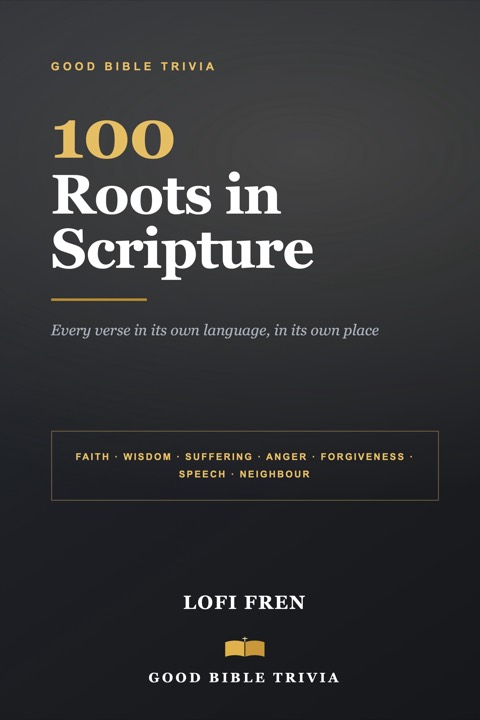
100 Roots in Scripture
Every verse in its own language, in its own place
The create of Psalm 51:10 is the Hebrew bara, the same word as Genesis 1:1, and 100 Roots in Scripture explains original words like that behind well-known verses.
See the book →